
From Play-Doh to Pixels: Breathing Life into Imagination with a Little Help from AI
There’s a certain magic that happens when my daughter and I sit down with a fresh tub of Play-Doh. The vibrant colours, the squishy texture, the limitless possibilities – it’s a sensory feast that fuels our creativity. We roll, we sculpt, we press, and slowly, a cast of quirky, colourful characters emerges from our shared imagination. In our house, learning is a full-contact sport, a kinaesthetic journey of discovery that often leaves our hands (and sometimes the table) a delightful mess.
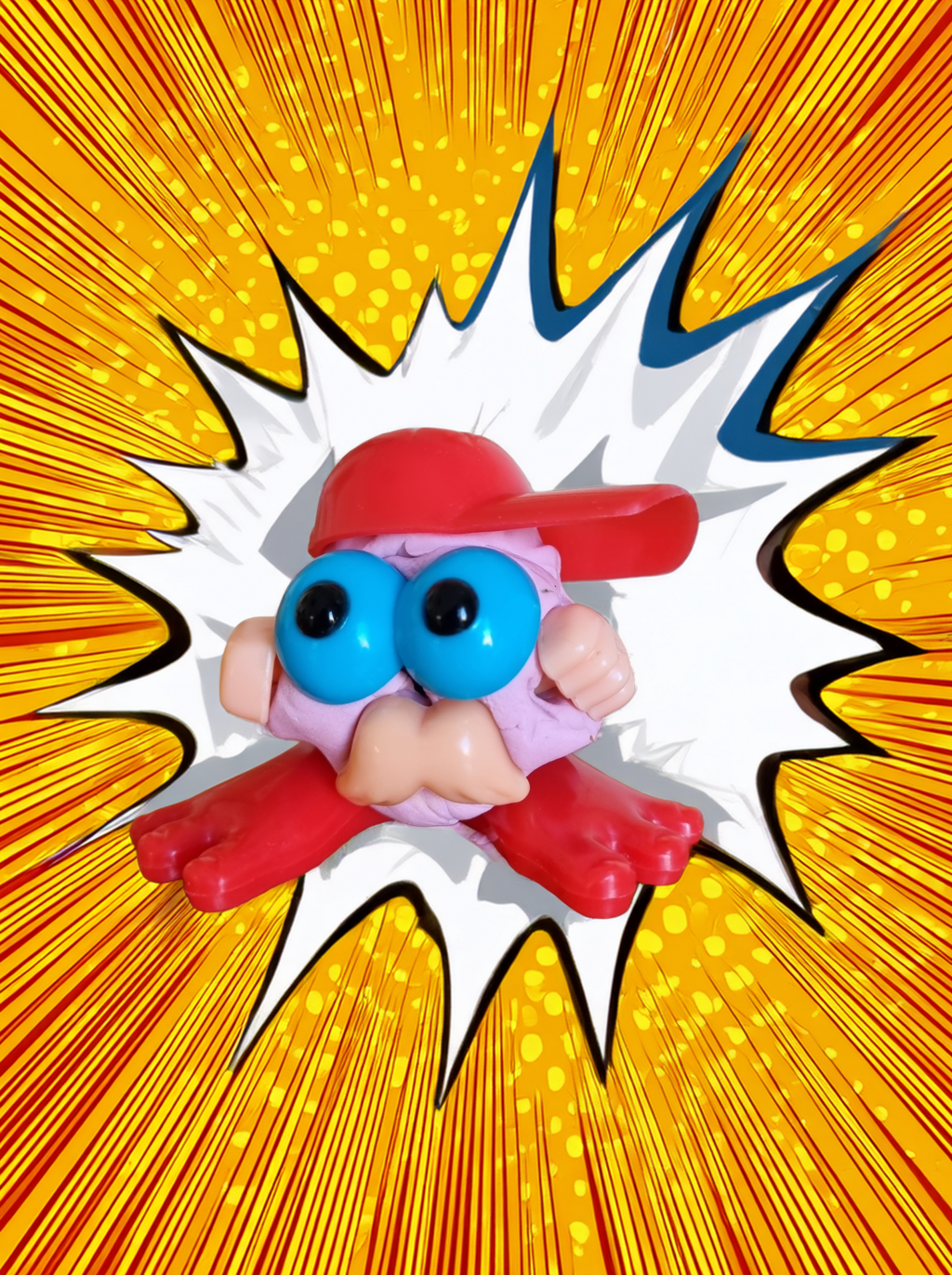
This love for tangible, hands-on learning isn't just a parenting philosophy; it’s a professional one. Back in 2004, I was at the front of a classroom, teaching rudimentary AI, coding, and even the painstaking art of stop-motion animation. My students and I would spend hours crafting clay figures and meticulously moving them frame by frame to create the illusion of movement. It was a labour of love, a testament to the power of patience and creativity.
Fast forward to today, and the world of artificial intelligence has leaped from the realm of academic theory and niche applications into our daily lives with breathtaking speed. And as a parent, I’m discovering the joy of bridging that gap - of taking our beloved, hand-moulded Play-Doh creations and breathing a new kind of life into them with the power of AI.
The Enduring Power of Kinaesthetic Learning
You may be surprised to hear this, but, I’ve long championed the power of learning by doing. Kinaesthetic learning, or learning through physical activity, is not just for restless toddlers. It’s a powerful tool for all ages, fostering a deeper understanding and connection to the subject matter. When we engage our bodies in the learning process, we activate different neural pathways, enhancing memory retention and problem-solving skills.
For my daughter, the simple act of shaping a Play-Doh character is a lesson in three-dimensional thinking, in cause and effect, and in the sheer joy of creation. It’s a world away from the passive consumption of content on a screen. It’s active, it’s imaginative, and it’s deeply personal.
When Old-School Crafts Meet New-School Tech
This is where the story takes a fascinating turn. We now have the incredible ability to take these tangible, love-infused creations and transport them into the digital realm. With AI-powered animation engines like Google's Flow, the characters we sculpt with our hands can now move, dance, and tell stories on screen. The process is surprisingly intuitive. We start with our finished Play-Doh masterpiece. A quick photo from a few different angles, and we have the raw material for our digital puppet. With a little prompt engineering, the AI then uses this information to generate a digital skeleton, allowing us to animate our creation with remarkable ease.
Suddenly, the lopsided, one-eyed monster we giggled over as we built it is wiggling and waving on the screen. The vibrant, multi-coloured caterpillar can inch its way across a digital leaf. The possibilities are as endless as our imagination.
Prompt: Waving arms and holding a banana
More Than Just Fun and Games: The Learning Behind the Magic
This fusion of physical and digital play is more than just a novelty; it’s a powerful learning experience. Here’s what I’ve observed:
- Demystifying AI: For my daughter, AI is no longer an abstract, intangible concept. She sees it as a creative partner, a tool that helps her bring her ideas to life. This early, positive exposure is crucial for developing digital literacy and a healthy understanding of the technology that will shape her future.
- Fostering a Growth Mindset: The iterative nature of this process is a fantastic lesson in perseverance. If an animation doesn't look quite right, we can go back, adjust the model, or tweak the animation sequence. It teaches her that creation is a process of refinement and that "mistakes" are just opportunities to learn and improve.
- Enhancing Storytelling: Our Play-Doh characters were always the stars of elaborate, imagined narratives. Now, with animation, those stories can be told in a whole new way. This encourages her to think about plot, character development, and visual storytelling.
- A Bridge Between Worlds: This activity seamlessly blends the tactile satisfaction of physical creation with the exciting possibilities of the digital world. It shows that technology doesn’t have to be a replacement for traditional play but can be a powerful extension of it.
Prompt: Melt into a mass of lava and then fireworks fly out
The Future of Learning is Playful and Powered by AI
Looking back at my time teaching in 2004, the advancements in AI are nothing short of astounding. What once required complex coding and immense patience can now be achieved with intuitive, user-friendly tools. As a parent and an educator, I believe we have a unique opportunity to harness this technology not to replace the essential, hands-on experiences of childhood, but to augment and enrich them.
So, the next time you find yourself with a handful of Play-Doh and a curious child, I encourage you to embrace the mess, to let your imaginations run wild. And then, take that one step further. Explore the world of AI-powered animation and watch as your creations take on a life of their own. You might be surprised at the magic you create together, one squishy, digital step at a time.