
Upskilling the Talent and Development Team: A Learning Needs Analysis
One of my core values is ensuring people have the skills and knowledge to thrive in the ever-evolving landscape of workplace learning.

The LNA Process
Before diving into the findings, I want to shed light on the process I followed to conduct this comprehensive analysis:
- Planning and Design: I started by defining the scope of the analysis, identifying the key stakeholders, and determining the data collection methods. I opted for a mixed-methods approach, combining quantitative data from a survey with qualitative insights from open-ended questions and team discussion.
- Data Collection: I developed a survey using Microsoft Forms, covering various skill areas relevant to our T&D function, including core L&D knowledge, practical skills, digital learning, business partnering, and emerging technologies. The survey was distributed to 24 individuals across different teams, achieving a 70.8% response rate.
- Data Analysis: I analysed the quantitative data by calculating average scores for each skill area, identifying areas of strength and weakness. The qualitative data was analyded by identifying common themes and patterns in the responses, providing context and depth to the quantitative findings.
- Reporting and Recommendations: I compiled the findings into a comprehensive report, highlighting key trends, skill gaps, and learning preferences. Based on the analysis, I developed a set of recommendations tailored to the needs of individual teams and the T&D function as a whole.
- Implementation and Evaluation: The next step involves working with team leaders and stakeholders to implement the recommendations, which may include developing new training programs, investing in learning technologies, and fostering a culture of continuous learning. The effectiveness of these initiatives will be regularly evaluated to ensure they are meeting the desired objectives.
Key Findings
The analysis revealed a range of insights that will inform our L&D strategy moving forward:
Strengths:
- Business Partnering: Most teams demonstrated strong skills in understanding business needs, aligning L&D solutions, and building relationships with stakeholders.
- Practical L&D Skills: The L&D team, in particular, excelled in designing training curricula, developing materials, and facilitating sessions.
- Leadership and Management Development: The Flight Path (FP) team showed significant strength in designing and facilitating leadership and management development programs.
Areas for Improvement:
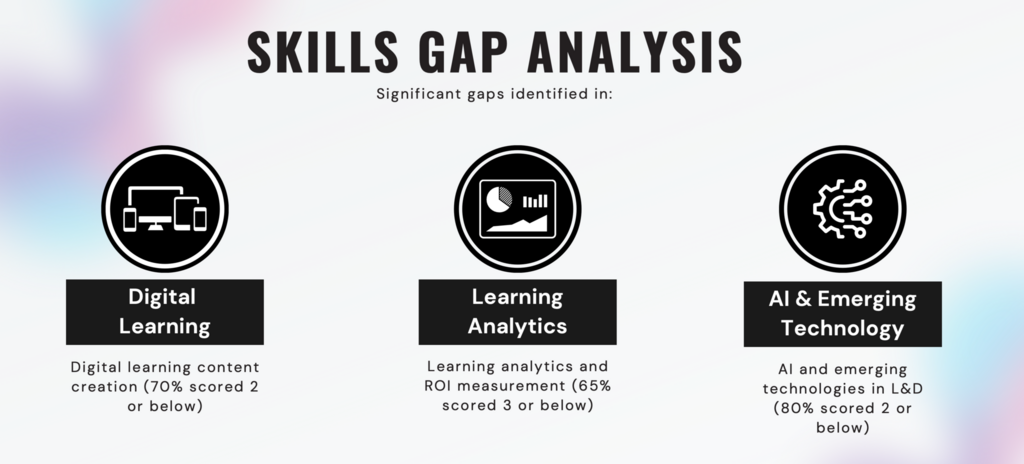
- Digital Learning and LMS Skills: Most teams, including L&D, Early Careers (EC), and FP, need to improve their skills in creating engaging eLearning content, using authoring tools, and advanced LMS management.
- L&D Theory and Core Knowledge: Several teams, particularly EC and Places Academy (PA), would benefit from strengthening their understanding of learning theories, instructional design models, and adult learning principles.
- Data Analysis and ROI Measurement: Across all teams, there's a need to improve skills in analysing learning analytics, measuring training effectiveness, and demonstrating L&D's impact on business outcomes.
Emerging Trends:
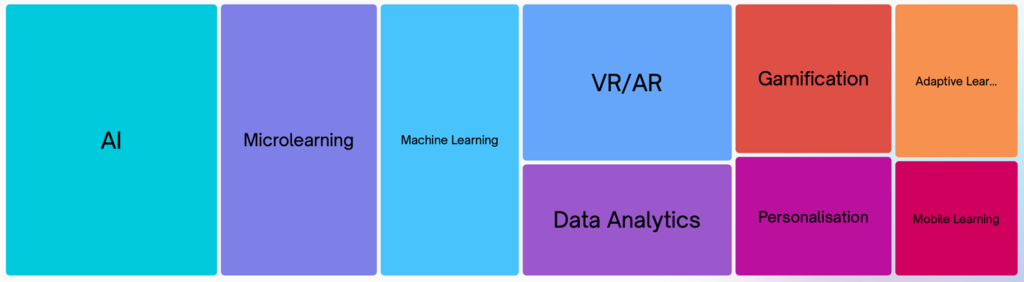
- Artificial Intelligence (AI) in L&D: There's a strong interest in AI-powered personalised learning, chatbots for learner support, and AI-assisted content creation.
- Data Analytics and Learning Measurement: This aligns with the identified skill gap, with a focus on ROI measurement, predictive analytics, and data-driven decision-making.
- Virtual and Augmented Reality (VR/AR): Interest is growing in immersive learning experiences and simulation-based training, particularly within the L&D and FP teams.
Learning Preferences:
- On-the-Job Training (OJT): This is the most preferred method across teams, highlighting the importance of practical, hands-on learning experiences.
- Blended Learning Approaches: There's a strong preference for a mix of learning modalities, such as combining online courses, workshops, and OJT.
- Workshops: These remain popular for topics that benefit from group discussion and interactive exercises.
Obstacles to Development:
- Time Constraints: This was consistently cited across all teams as the primary obstacle to skill development.
- Workload: Closely related to time constraints, heavy workloads hinder employees' ability to engage in learning activities.
- Limited Access to Resources: This includes both learning materials and technology tools.
Recommendations
Based on these findings, I've outlined several recommendations to address the identified gaps and enhance our T&D function:
- Digital Learning Initiative: Launch a comprehensive program to improve digital learning and LMS skills, invest in eLearning authoring tools, and develop internal certifications.
- Data-Driven L&D: Implement a team initiative on learning analytics and ROI measurement, provide training on data analysis tools, and establish KPIs for L&D initiatives.
- Emerging Technologies Integration: Create an "AI in L&D" task force to explore and pilot AI applications, develop a roadmap for integrating VR/AR, and partner with edtech companies.
- Blended Learning Approach: Design learning pathways that combine OJT, workshops, and online learning, and develop a toolkit for creating effective blended learning experiences.
- Time for Learning: Establish protected learning time, integrate microlearning opportunities into daily workflows, and develop a policy that recognises and rewards continuous learning.
Conclusion
This LNA has provided a roadmap for enhancing the skills and knowledge of our T&D team. By addressing the identified gaps, leveraging emerging trends, and overcoming obstacles to development, we can better support the organisation's learning and development needs. I'm excited to work with the team to implement these recommendations and foster a culture of continuous learning and growth.
New document