
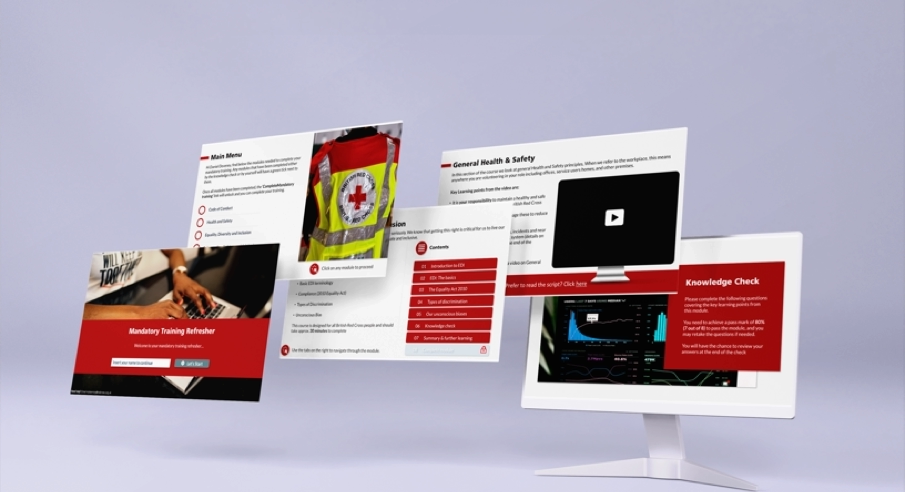
Assessing Mandatory Knowledge
This project involved designing and implementing a personalised, blended learning solution to significantly improve mandatory training compliance rates among long-serving staff and volunteers at the British Red Cross. The initiative aimed to efficiently upskill experienced personnel on eight core compliance modules by acknowledging their existing knowledge while specifically targeting any identified knowledge gaps, thereby reducing training time and enhancing effectiveness.
Places for People
2024
eLearning
End-to-End Development
Problem
The British Red Cross faced the challenge of ensuring all personnel, particularly long-serving staff and volunteers with considerable existing experience, completed mandatory compliance training efficiently.
The traditional approach of requiring everyone to complete the full training modules often led to experienced individuals having to review content they already knew, resulting in disengagement, increased time commitment, and potential delays in achieving full compliance across the organisation.
A more targeted, time-efficient method was needed to respect existing expertise while guaranteeing essential knowledge was current and compliant.
Tools Used
- Articulate Storyline: eLearning authoring tool)
- LMS/LXP Integration: Cornerstone LMS
- Premiere Pro: Video Editing
- After Effects: Motion Graphics
- Illustrator: Graphics
Solution
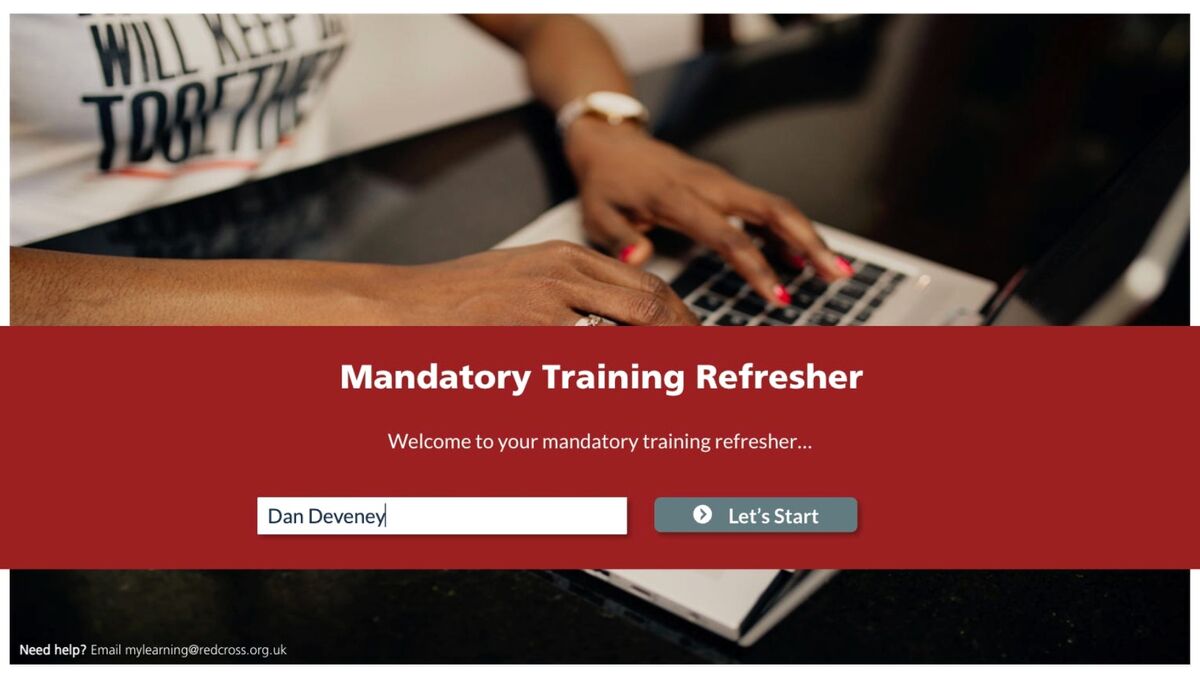
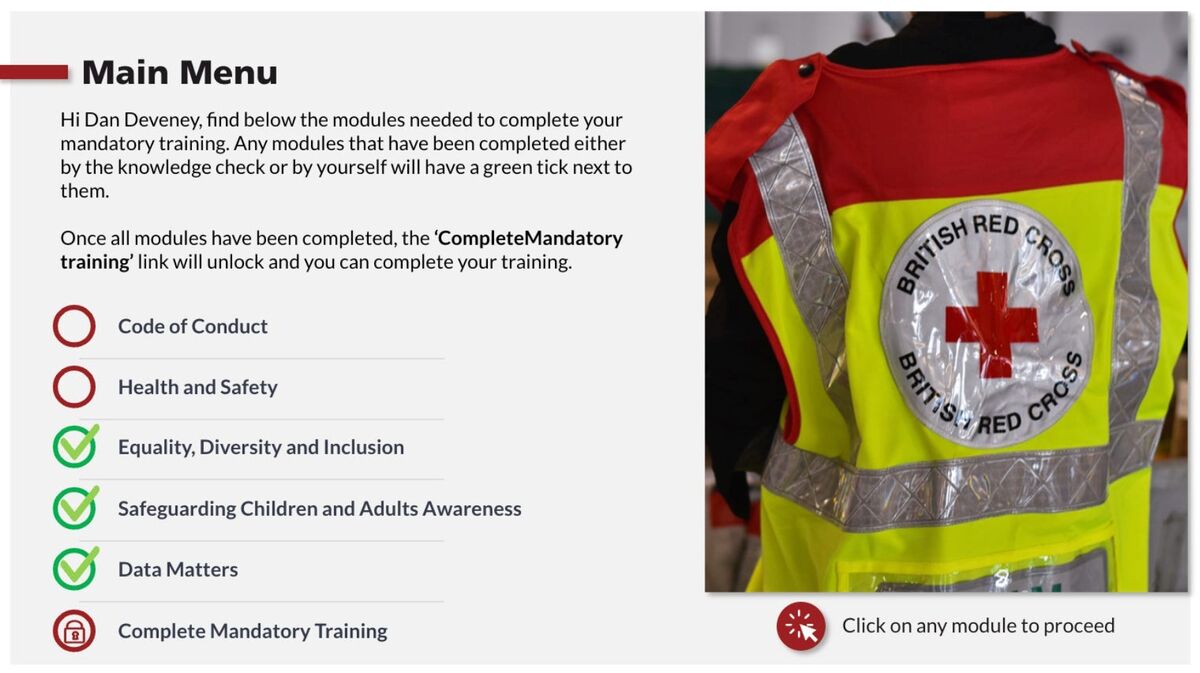
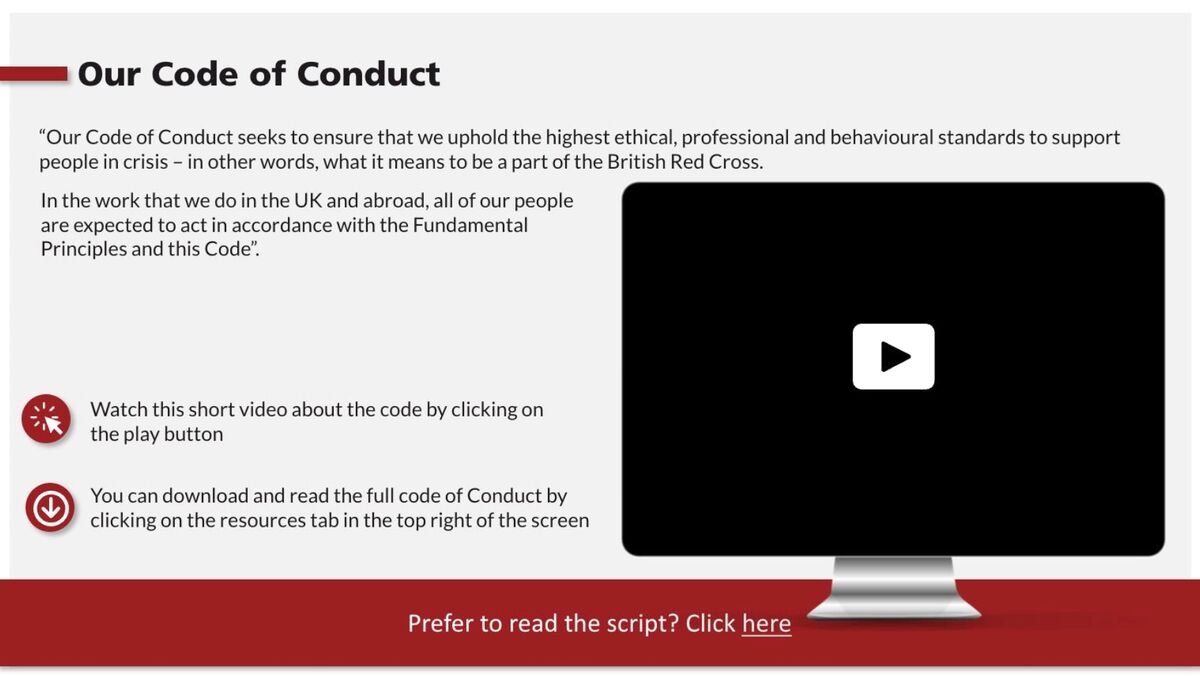
To address this challenge, a blended learning approach was developed, integrating formative assessment with tailored eLearning paths. For each of the eight mandatory compliance modules, a short, focused formative assessment was created. These assessments served as a knowledge check, allowing experienced staff and volunteers to demonstrate their existing understanding of the module's content.
Individuals who successfully passed the assessment for a specific module were automatically credited with completing that module, bypassing the need for full training. For those who did not pass, the assessment results were leveraged to create a personalised learning journey. The core eLearning modules were redesigned or adapted to be modular, allowing the system to direct learners specifically to the sections addressing their identified knowledge gaps. This ensured training time was spent effectively, focusing only on necessary content.
The project also incorporated robust data analytics capabilities to monitor learner progress, assessment outcomes, and overall compliance rates in real-time. This data was crucial for continuous evaluation and refinement of the training materials and process.
Throughout the design and development phases, close collaboration with Subject Matter Experts (SMEs) within the British Red Cross was maintained to ensure the accuracy, relevance, and compliance of all training content.
Impact
The implementation of this personalised, blended learning solution yielded significant positive impacts aligned with the project goals:
- Increased Mandatory Training Compliance Rates: By removing the barrier of redundant training for experienced personnel and making the learning process more efficient, overall compliance rates increased by 65%.
- Reduced Time Commitment: The ability for experienced staff and volunteers to test out of known content drastically reduced the average time required to achieve compliance across the eight modules.
- Personalised Learning Experience: The targeted approach ensured learners focused only on areas where they needed development, making the training more relevant and engaging on an individual level.
- Improved Overall Training Efficiency and Effectiveness: The program optimised the use of training resources and learner time, leading to a more efficient and demonstrably effective compliance training program for a large, dispersed organisation.

Lessons Learned
This project underscored several key lessons regarding the design and implementation of large-scale compliance training within experienced workforces:
- Value of Personalisation: Recognising and validating learners' existing knowledge through formative assessment is crucial. It not only makes training more efficient but also respects the experience of long-serving personnel, increasing engagement and buy-in.
- Power of Formative Assessment: Assessments can be more than just evaluative tools; they can be powerful drivers for personalised learning paths, effectively diagnosing needs and directing learners to relevant content.
- Need for Robust Data Analytics: Implementing a system for tracking key metrics (assessment scores, completion rates, time on module) is essential for monitoring progress, measuring the program's impact, identifying potential issues, and informing continuous improvement efforts.
- Flexibility in Design: Designing modular eLearning content allows for greater flexibility in creating personalised pathways and adapting to different learner needs identified through assessment.
This project effectively demonstrates my proficiency in applying adult learning principles, designing impactful eLearning experiences, integrating technology solutions for personalised learning, and managing projects from conception through to implementation and evaluation within a complex organisational environment.
