

Bridging the Language Gap In eLearning
This project addressed the critical need for accessible and inclusive eLearning by developing and implementing a multilingual training solution. Recognising the diverse linguistic backgrounds of our 11,000 colleagues, we aimed to eliminate language barriers in compliance and essential training, extending this capability to customer-facing content as well.
Places for People
2023
Video/Infographic
Research and Design
Problem
A significant portion of the workforce, comprising non-native English speakers, struggled to fully engage with and understand mandatory compliance and eLearning materials.
This language barrier hindered their ability to acquire critical knowledge, impacting their job performance and the organisation's compliance standards.
The lack of multilingual support also limited the accessibility of customer-facing eLearning offerings.
Tools Used
- Great Place to Work Survey - Survey tools
- Canva - Video creation and Infographics
- Power BI - Data Visualisation
- Chromium-based web browsers
- Viva Engage - Internal communication platforms
Solution
We implemented a data-driven, technology-enabled solution involving:
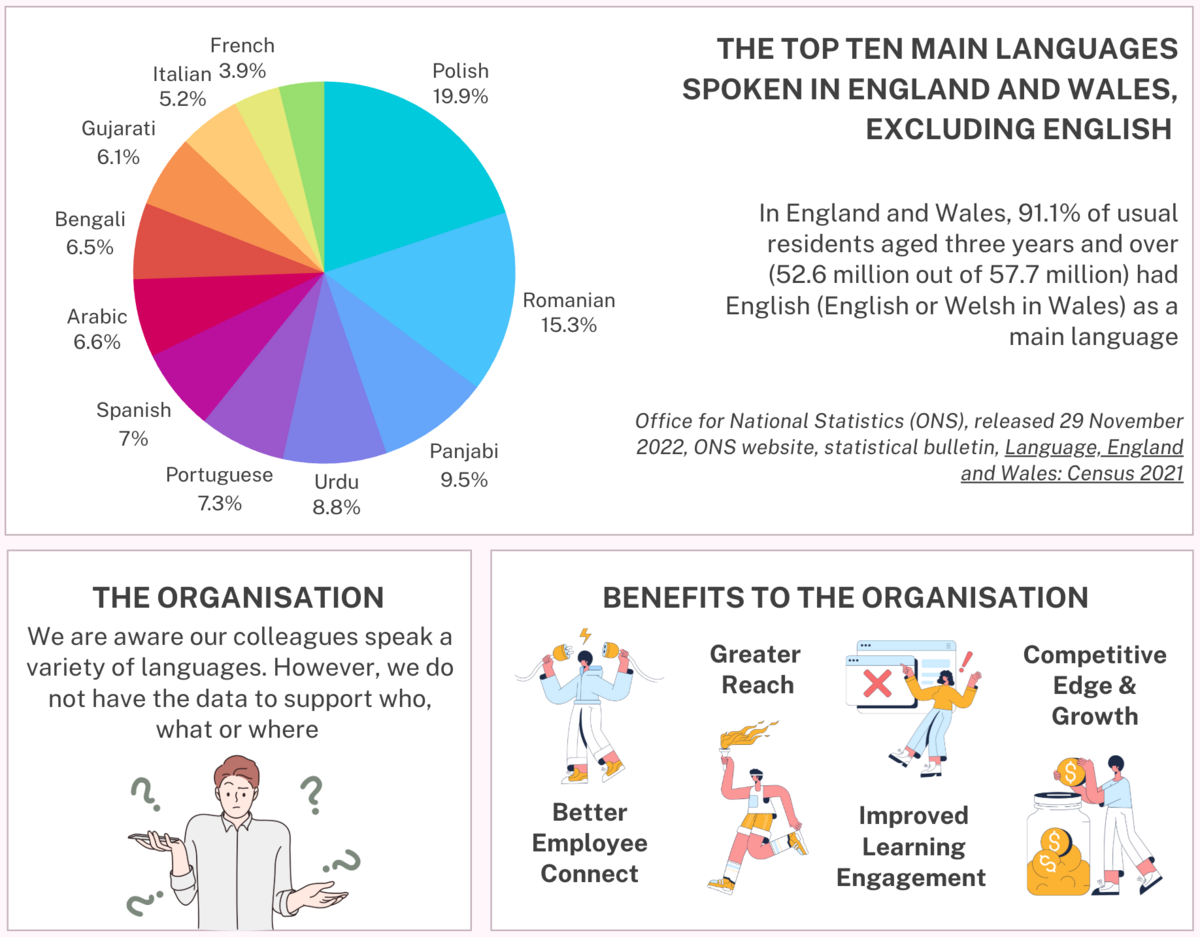
- Comprehensive Data Collection: Conducted a large-scale survey to identify the native languages spoken by our colleagues, cross-referencing this data with Office for National Statistics (ONS) data for accuracy.
- Data Analysis and Visualisation: Utilised data visualisation tools to create a single source of truth highlighting the language diversity, providing clear insights for stakeholders.
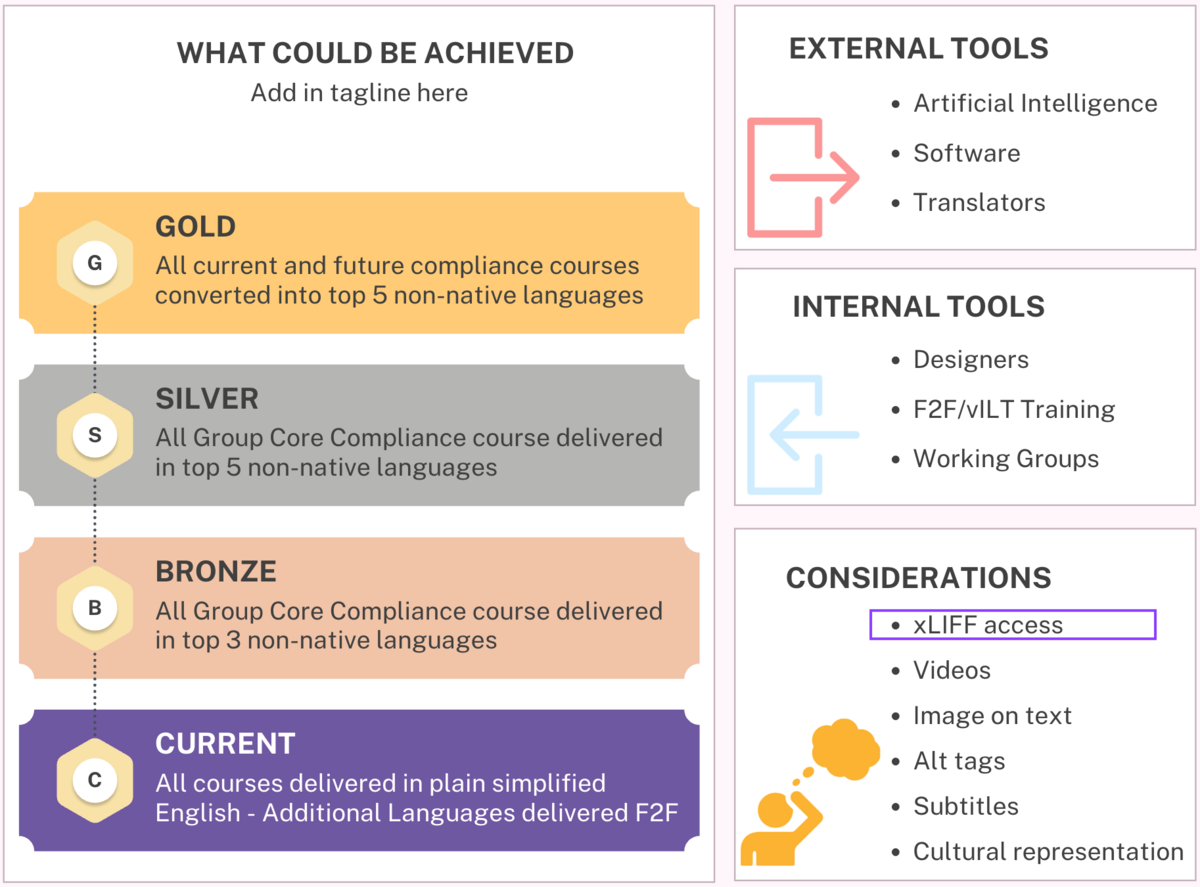
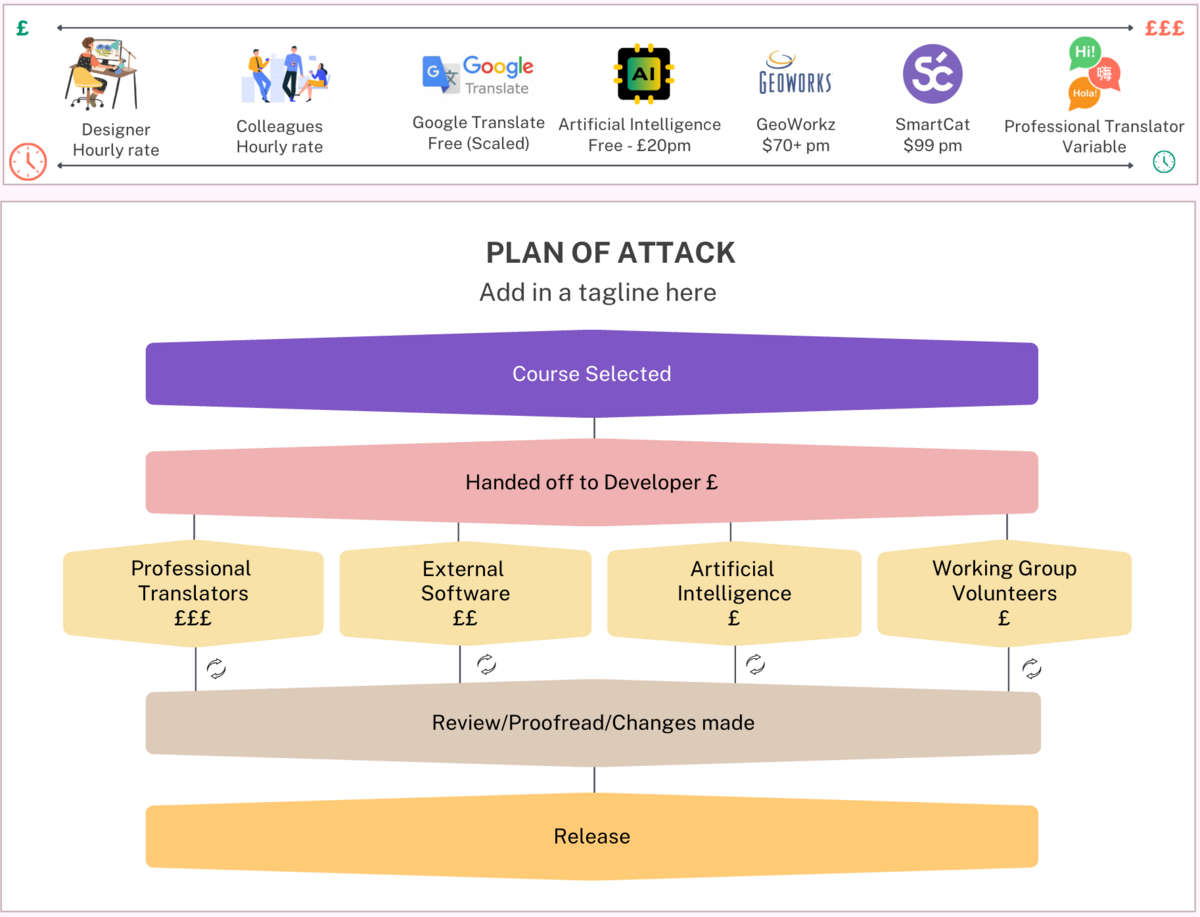
- Translation and Localisation: Researched and evaluated various translation and localisation tools, selecting a cost-effective solution that integrated with our existing eLearning platform.
- Technology Integration: Leveraged Chromium-based web browsers for enhanced language support and utilised internal communication channels to promote the multilingual initiative.
Impact
- Increased accessibility and comprehension of compliance and eLearning materials for non-native English-speaking colleagues.
- Enhanced inclusivity and engagement within the workforce, fostering a sense of belonging.
- Improved compliance rates and reduced potential risks associated with language barriers.
- Expanded the reach of customer-facing eLearning, attracting and serving a broader audience.
- Demonstrated a commitment to diversity and inclusion, enhancing the organisation's reputation.
- The Infographic created, allowed for easy to digest data, which was used in further company wide inclusion initiatives.
Lessons Learned
- The significance of data-driven decision-making in addressing diverse learning needs.
- The effectiveness of utilising technology to create accessible learning experiences.
- The value of cross-referencing internal and external data to enhance accuracy.
- The necessity of conducting cultural reviews for translated materials tailored to specific demographics.
