
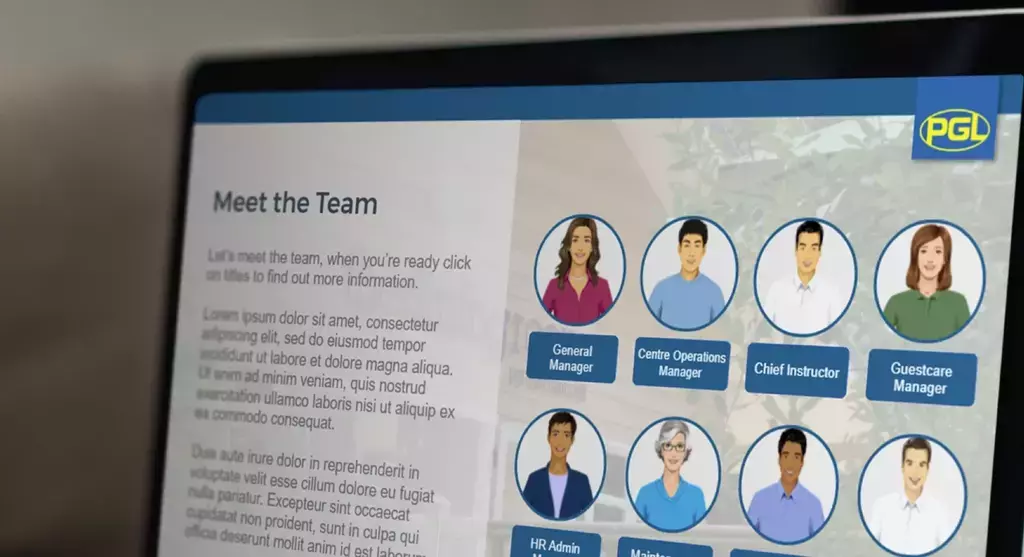
PGL VLE
This project involved the design, development, and implementation of a Virtual Learning Environment (VLE) for PGL Travel Ltd. The primary objective was to establish a centralised digital platform to deliver essential training to a geographically dispersed workforce, thereby enhancing accessibility, standardising content delivery, and reducing the logistical complexities and costs associated with traditional face-to-face training methods. This initiative marked my initial significant engagement with Learning Management System (LMS) development and integration, providing a foundational experience in digital learning solutions within a large operational context.
PGL Travel Ltd.
2017 - 2019
LMS/LXP
LMS Developer
Problem
PGL Travel Ltd faced significant challenges in delivering consistent and cost-effective training to its large and geographically scattered workforce, which includes many seasonal staff located at various activity centres.
Relying heavily on traditional hands-on training methods, while effective for practical skills, presented considerable logistical and financial burdens. These included substantial costs for trainer travel, accommodation, and the use of physical training facilities. Furthermore, ensuring uniformity in training content and delivery across all locations was difficult, potentially leading to inconsistencies in staff knowledge and skills.
There was a clear need for a scalable, accessible, and engaging training solution that could supplement or replace some aspects of traditional training, centralize knowledge, and provide a more flexible learning experience for employees regardless of their location.
Tools Used
- Moodle: The core Learning Management System (LMS) used for hosting courses, managing users, and tracking progress.
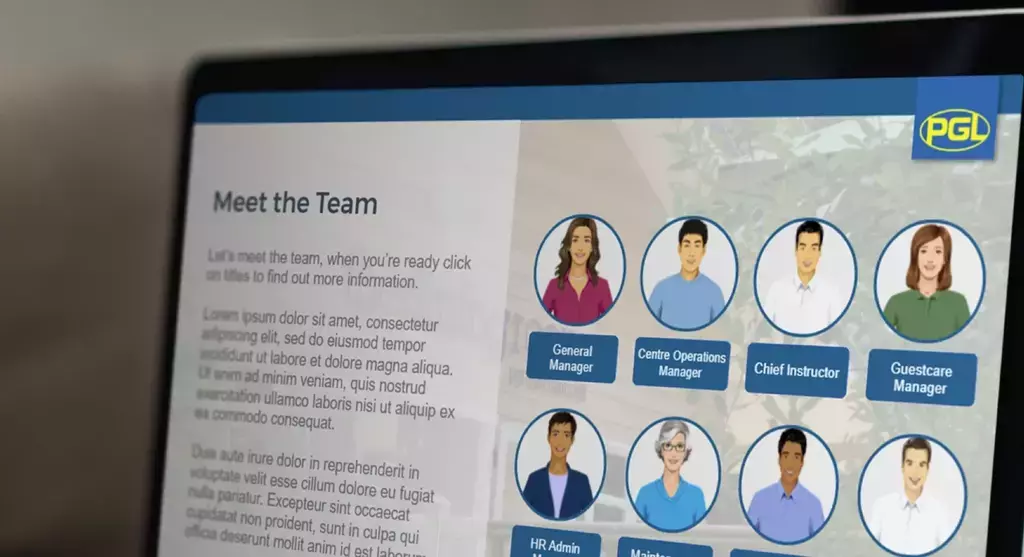
- Articulate Storyline: Used for developing interactive and engaging eLearning modules.
- Adobe Captivate: Utilised for creating software simulations and other types of interactive training content.
- Single Sign-On (SSO): Implemented to streamline user access and enhance security
Solution
The solution was the design and implementation of a comprehensive Virtual Learning Environment (VLE) using Moodle as the core platform. This VLE was developed to serve as a single source of truth for all organisational training content and knowledge sharing.
The learning experience within the VLE was designed using a blended learning approach. This involved combining self-paced eLearning modules, developed using tools like Articulate Storyline and Adobe Captivate, with opportunities for social learning and collaborative activities facilitated through the platform. To cater to the needs of a busy, often seasonal workforce, microlearning principles were applied, breaking down complex operational procedures, safety protocols, and customer service standards into concise, easily digestible modules. Gamification elements, such as badges, points, and leaderboards, were integrated to enhance learner engagement, motivation, and completion rates.
Content creation and management workflows were established to empower subject matter experts (SMEs) across the organization to contribute to and maintain training materials within the VLE, ensuring the content remained accurate and up-to-date. Single Sign-On (SSO) was implemented to provide seamless and secure access for all employees.
The VLE was also configured to track key learning metrics, including learner progress, module completion rates, assessment scores, and user engagement levels. This data tracking was fundamental to the project's iterative design process, providing valuable insights for continuous improvement of course content and the overall learning experience.
Impact
The implementation of the PGL VLE yielded significant positive impacts across the organization. While specific quantifiable metrics can be challenging to isolate in a large-scale project like this without internal data access, the key areas of impact included:
- Reduced Training Costs: By migrating a significant portion of theoretical and knowledge-based training online, the VLE substantially reduced expenses related to travel, accommodation, and physical training materials.
- Increased Accessibility and Flexibility: The VLE provided employees with 24/7 access to training materials from any location with internet access, allowing them to complete mandatory and developmental training at their own pace and on their own schedule, which was particularly beneficial for seasonal staff.
- Improved Consistency in Training Delivery: Centralizing content on the VLE ensured that all employees received the same standardized information, leading to a more consistent level of knowledge and skill across the dispersed workforce.
- Enhanced Learner Engagement: The incorporation of microlearning, interactive elements built with Storyline and Captivate, and gamification features contributed to a more engaging and motivating learning experience compared to traditional methods.
- Empowerment of SMEs: The platform enabled SMEs to directly contribute to and update training content, ensuring the relevance and accuracy of the information provided.
- Data-Driven Improvement: The tracking and analysis of learner data provided actionable insights that informed ongoing refinements to course design and delivery, leading to a continuously improving learning ecosystem.
Lessons Learned
This project provided invaluable insights into the complexities and critical success factors of implementing a VLE within a large, dynamic organisation. Several key lessons were learned:
- The paramount importance of a thorough needs analysis: A deep understanding of the diverse training needs of a dispersed and seasonal workforce is crucial from the outset. This includes understanding their access to technology, preferred learning styles, and the specific knowledge and skills required for their roles.
- Consistent and early stakeholder engagement is vital: Bringing training managers, SMEs, IT, and most importantly, representatives of the end-users (the staff) into the design and development process early and keeping them involved throughout ensures the platform meets their needs and fosters buy-in.
- Iterative design and development with user feedback is essential: Building and refining the VLE based on continuous feedback from learners and administrators helps to identify usability issues, content gaps, and areas for improvement, ultimately leading to a more effective and user-friendly platform.
- Robust data analytics are key to continuous improvement: Implementing comprehensive tracking and reporting from day one allows for meaningful analysis of learning effectiveness, identification of challenging content, and measurement of user engagement, informing ongoing optimization efforts.
- Effective change management is critical for adoption: Simply providing a new platform is not enough. A comprehensive change management strategy, including clear communication about the VLE's benefits, comprehensive training on its use, and ongoing technical and pedagogical support, is essential to ensure successful user adoption and maximize the return on investment. Navigating the transition from established traditional training methods requires patience, support, and a clear articulation of the value proposition for the end-user.
