
Professional Boundaries
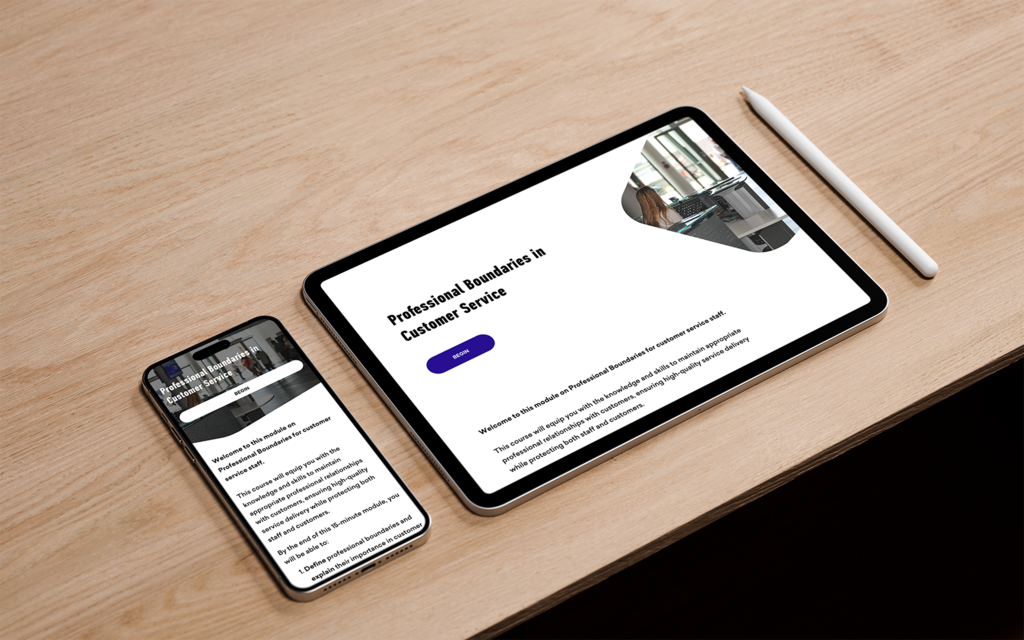
This portfolio entry details the design and development of a crucial eLearning module focused on establishing and maintaining professional boundaries within customer service interactions. The module was created for Places for People in 2025 and delivered as a blended video learning experience. My role encompassed the full spectrum of Learning Experience Design, from initial concept through to delivery considerations, ensuring the content was not only informative but also highly applicable and engaging for the target audience.
Places for People
2024
eLearning
Learning Experience Designer
Problem
Organisations with customer-facing roles often face challenges related to inappropriate interactions between staff and customers. Without clear guidance, employees may inadvertently blur the lines between professional duty and personal relationships, potentially leading to misunderstandings, complaints, ethical concerns, and reputational damage for the organization. A lack of understanding regarding acceptable professional conduct and boundary recognition necessitates targeted training to mitigate these risks and ensure a consistent, professional level of service delivery.
Tools Used
- Articulate Rise: Utilised for its responsive design capabilities and ease of creating engaging, interactive eLearning content structures.
- Adobe Illustrator: Employed for the creation of custom graphics, illustrations, and visual assets to support the module's content and enhance its visual appeal.
- Canva: Used to produce dynamic and engaging animated videos that were integrated into the module to explain key concepts and present scenarios.
Solution
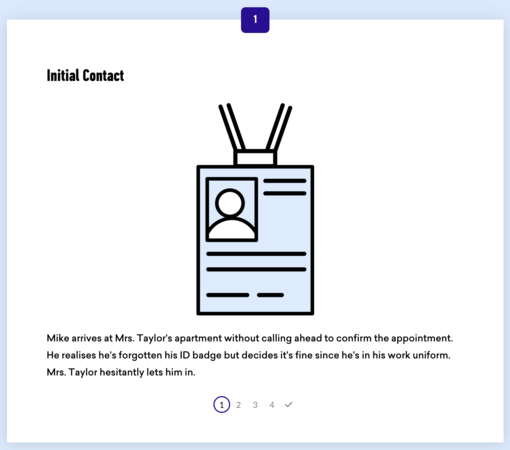
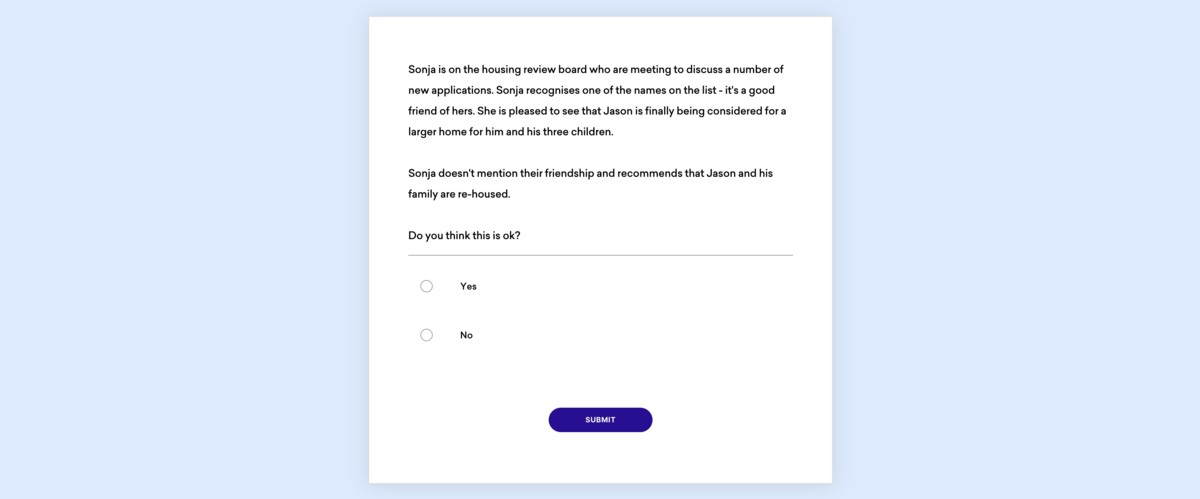
The solution developed was a comprehensive, interactive eLearning module delivered via a blended approach incorporating video. The module employs a scenario-based learning methodology, immersing learners in realistic customer service situations. This approach allows learners to actively apply concepts related to identifying, establishing, and maintaining professional boundaries in a safe environment.
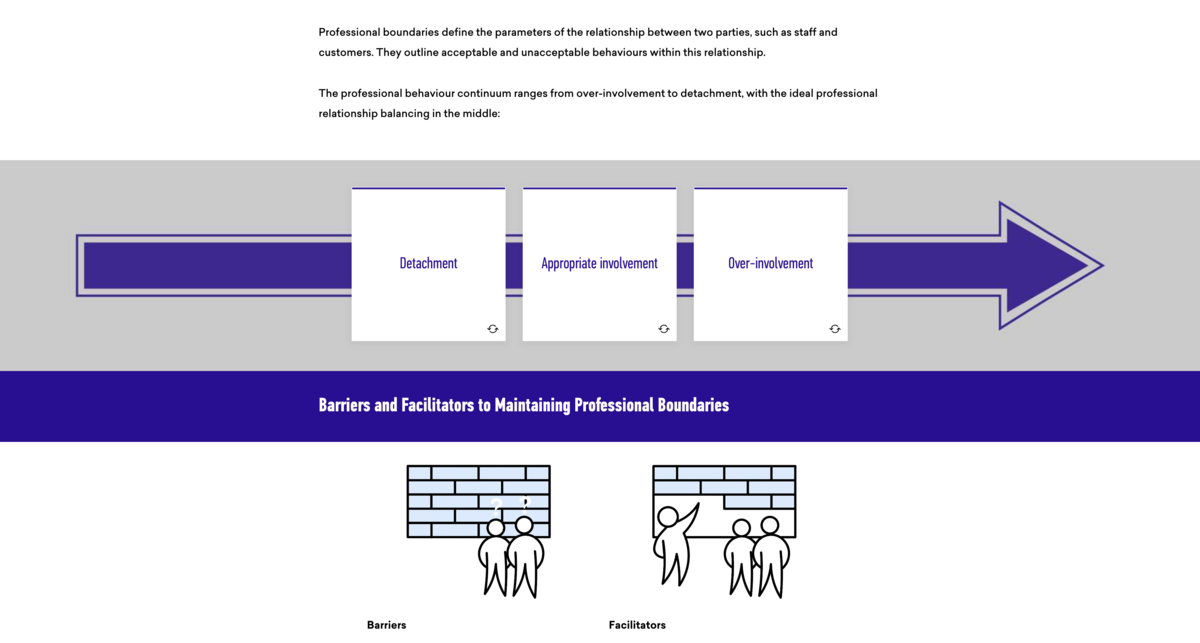
Key learning objectives were addressed by covering the definition and importance of boundaries, differentiating professional relationships from personal ones, identifying unacceptable behaviours, analysing potential boundary violations through case studies, and clarifying staff obligations regarding professional conduct.
The module was designed to be accessible and engaging, utilising interactive elements and visually appealing assets to enhance comprehension and retention.
Impact
The primary impact of this module is to equip customer service staff with the knowledge and skills necessary to navigate interactions professionally and ethically. By clearly defining acceptable conduct and potential pitfalls, the training aims to reduce instances of boundary violations, improve the quality and consistency of customer service, protect both staff and the organisation from potential issues, and reinforce a culture of professionalism.
While specific quantitative data is subject to client reporting, the design facilitates tracking through the LMS, allowing for future analysis of completion rates, assessment scores, and potentially, a reduction in related customer feedback or incidents over time. The use of relatable scenarios is expected to enhance knowledge transfer and application on the job.
Lessons Learned
Several key lessons were reinforced during the development and initial deployment of this module:
- Scenario-Based Learning Effectiveness: The project underscored the power of well-crafted, relatable scenarios in engaging learners and effectively demonstrating the practical application of abstract concepts like professional boundaries. Learners responded positively to the opportunity to analyse and decide within realistic contexts.
- Value of Data Analytics: The integration with the LMS's data analytics capabilities proved invaluable. It allowed for the tracking of learner progress and interaction patterns, providing actionable insights into which areas of the module were most effective and where learners might be encountering difficulties, informing potential future iterations.
- Importance of Subject Matter Expertise: Close collaboration with subject matter experts in customer service and compliance was critical. Their real-world experience and understanding of the specific challenges faced by the target audience ensured the content was accurate, relevant, and directly addressed the required learning outcomes. This partnership was fundamental to the module's credibility and effectiveness.
This project demonstrates my proficiency in designing impactful learning experiences that address critical organisational needs, leveraging appropriate technologies, collaborating effectively with stakeholders, and using data to inform design decisions.
