
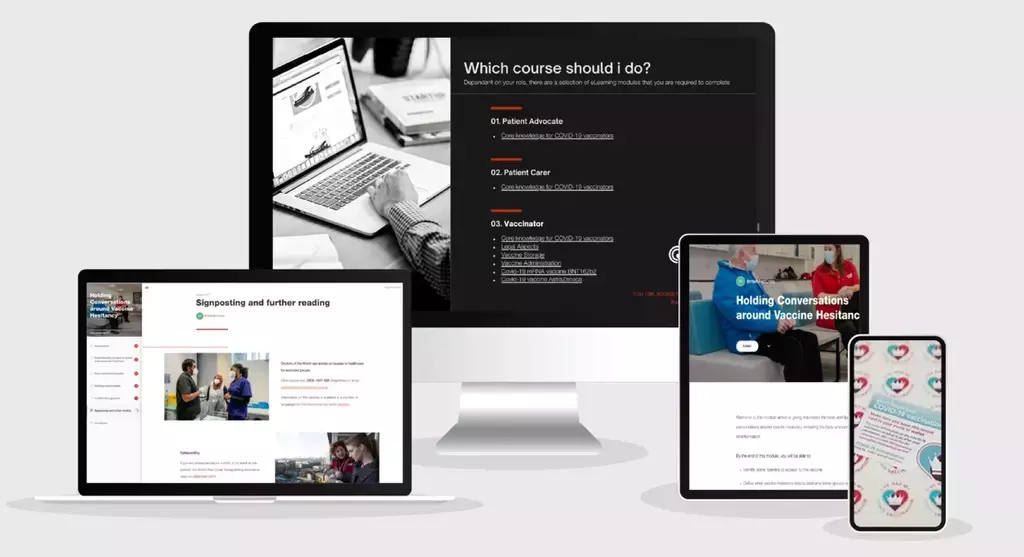
Vaccination Programme
Developed and deployed a critical blended learning programme and centralised learning platform to rapidly upskill and coordinate personnel from the British Red Cross, St John Ambulance, and the NHS during the initial phase of the COVID-19 pandemic. This initiative provided a single source of truth for crucial information and delivered targeted, accessible training to support front-line efforts.
British Red Cross, NHS and St. Johns Ambulance
2019 - 2020
Blended
Developer and Designer
Problem
The COVID-19 pandemic created an urgent need for rapid, widespread knowledge dissemination and skills development across multiple critical organisations including the British Red Cross, St John Ambulance, and the NHS. A decentralised landscape of resources and training methods hindered efficient coordination, upskilling, and knowledge transfer essential for combating the virus's spread and ensuring public safety.
There was a critical need to consolidate information, standardise training, and provide easily accessible learning opportunities to a diverse range of professionals and volunteers operating under extreme pressure and rapidly evolving circumstances.
Tools Used
- Learning Management System (LMS) - Moodle
- eLearning Authoring Tool - Articulate 360
- Video Conferencing Platform - Zoom
- Data Analytics Platform - Google Analytics, LMS reporting
Solution
A comprehensive blended learning solution was designed and implemented to address the urgent training needs.
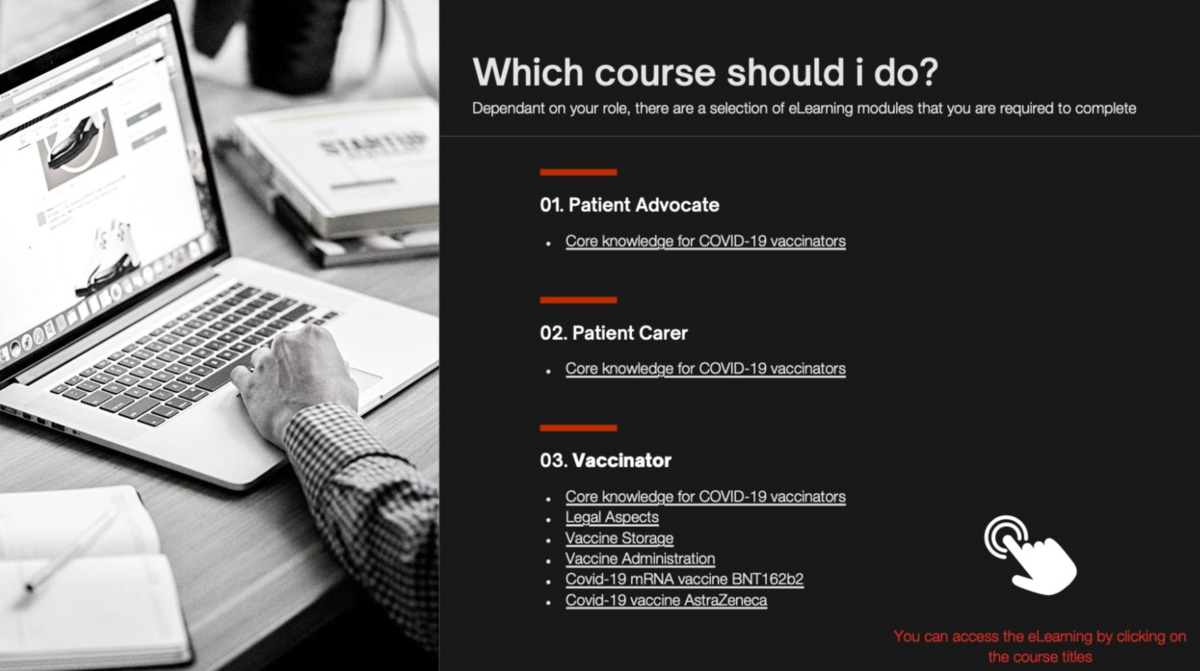
This involved developing a centralised learning platform using Moodle to serve as a single source of truth for all COVID-19 related information and resources. A detailed needs analysis, involving stakeholders from all partner organisations, informed the development of modular eLearning content using Articulate 360 and virtual Instructor-Led Training (vILT) sessions delivered via Zoom.
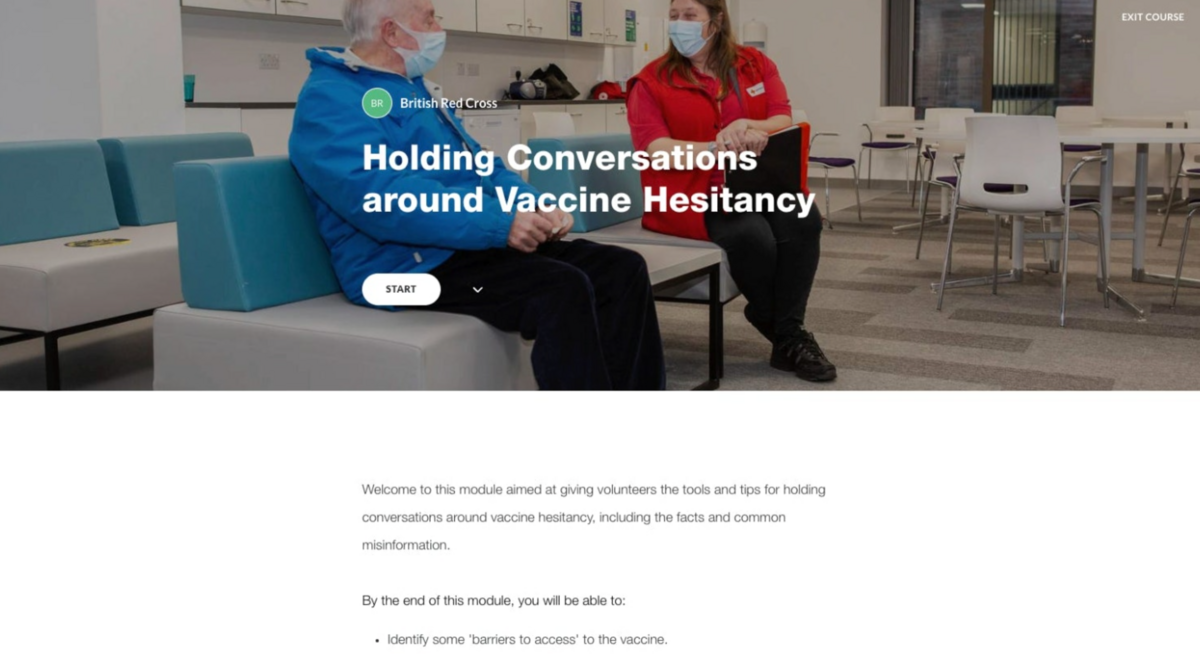
The eLearning modules incorporated microlearning principles, scenario-based learning, and knowledge checks to ensure engagement and knowledge retention. vILT sessions provided opportunities for live interaction, practical application, and addressing specific concerns.
All content was integrated into the Moodle LMS, providing 24/7 accessibility for diverse users across the partner organisations. Communication was maintained through regular meetings and a collaborative platform to ensure alignment and responsiveness to the evolving situation.
Impact
The project significantly contributed to the effective response during the initial phase of the COVID-19 pandemic by:
- Facilitating Rapid Upskilling: Enabled the swift training and deployment of personnel across partner organisations, ensuring critical roles could be filled promptly.
- Ensuring Knowledge Consistency: Provided a single, reliable source of information, ensuring that all trained personnel received accurate and consistent guidance, reducing confusion and improving coordination.
- Increasing Accessibility: The 24/7 accessible platform allowed individuals to learn at their own pace and schedule, crucial for those working demanding and unpredictable hours.
- Improving Staff Confidence: Equipped staff and volunteers with the necessary knowledge and skills, increasing their confidence and competence in performing their duties under challenging conditions.
- Enhancing Collaboration: Fostered a more coordinated approach between the British Red Cross, St John Ambulance, and the NHS through a shared understanding and unified training approach.
Lessons Learned
- This project strongly reinforced several key lessons:
- Stakeholder Collaboration is Paramount: The success of the initiative was heavily reliant on continuous and effective collaboration with diverse stakeholders from each partner organisation. Early and consistent communication ensured the training program genuinely addressed their specific, evolving needs during a crisis.
- Centralised Platforms are Critical in Crises: The value of having a single, centralised, and easily accessible platform for disseminating crucial information and training during a crisis was clearly demonstrated. It facilitated rapid upskilling and ensured consistent messaging across multiple large organisations.
- Data Informs Decisions: Leveraging data analytics from the LMS and vILT feedback was crucial for evaluating the effectiveness of the training program in real-time and informing necessary adjustments and future iterations.
- Agility and Adaptability are Key: The rapidly changing nature of the pandemic required an agile approach to development and deployment, highlighting the importance of being able to quickly adapt content and delivery methods.
